The Golden Age Through the Post War Years 1930-1959
Paramount Pictures: The Golden Era (1930-1959)
The 1930s through the mid-1950s proved to be an immensely successful period for Paramount. Many of the classics we’ve all come to know and love were created during this time. In the midst of the Great Depression, the memorable Bing Crosby musicals, Cecil B. DeMille spectacles, and the outrageous comedies of Mae West were all created.
Throughout its history, Paramount has nurtured and aided the industry’s most legendary movie talent. From the earliest years through the 1930s, actors and actresses were more like professional football players of today—they were contracted by studios and could only appear in that studio’s films. They were also traded back and forth between studios for particular productions. (In more recent times, actors, directors, and other talent have the freedom to work on any production with any studio.)
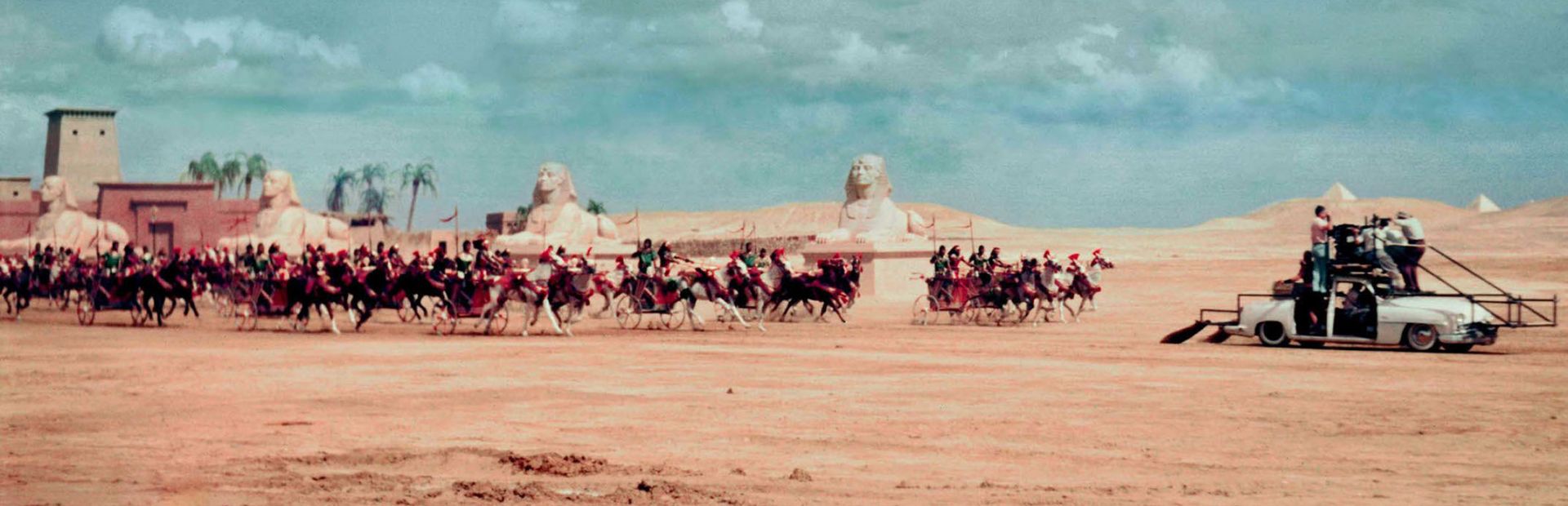
During the mid-to-late 1940s, Paramount’s films began receiving critical acclaim. In 1944, Paramount won its second Academy Award for Best Picture with Going My Way. The very next year, The Lost Weekend took the top prize. Throughout the early 1950s, Paramount dominated the Academy Award nominee lists with enduring classics, including Sunset Boulevard, The Greatest Show on Earth (1952 Academy Award Winner), Shane, The Rose Tattoo, and DeMille’s remake of The Ten Commandments.
Memorable Movies (1930-1959)
Bob Hope & Bing Crosby
“Road” Series (1940-1962)
Going My Way (1944)
Sunset Boulevard (1950)
The Greatest Show on Earth (1952)
White Christmas (1954)
The Ten Commandments (1956)
Famous Stars (1930-1959)
Cecil B. DeMille
Bob Hope
Bing Crosby
Marlene Dietrich
Mae West
Gary Cooper
The Marx Brothers
Elvis Presley